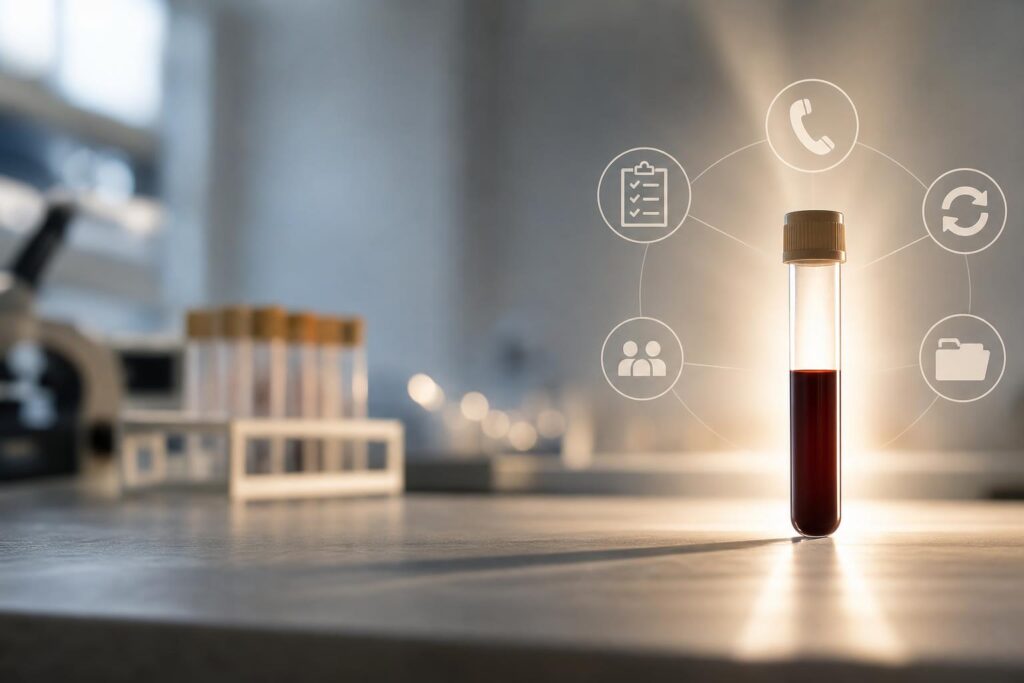
The tube looks small until it lands on your bench and suddenly the whole rhythm changes. One specimen can turn a normal run into phone calls, recollect requests, troubleshooting, documentation, and a follow-up trail that follows you longer than the actual testing time.
That is one of those lab lessons nobody really trains you for. You learn the procedure. You learn the analyzer. You learn rejection criteria, critical result policy, sample stability, and where to document the issue. But the shift in your head when one specimen becomes the center of the bench? That comes from working the bench itself.
This is Day 2 of my 4-day lablife reflection series: Things the Lab Teaches You That No One Trains You For. Today is about the specimen that changes the whole shift.
Outsiders see one tube
People outside the lab often see a specimen as one item. A tube. A cup. A swab. Something collected from a patient and sent to the lab.
Lab people see the chain reaction.
A STAT specimen is not only a faster test. It changes priority. It makes you look at the pending list differently. It can interrupt a batch, pull your attention away from routine work, and force you to decide what needs to move first without losing track of everything else already in progress.
A mislabeled specimen is not only a label problem. It can become a patient identification problem, a phone call, a rejection, a recollect, and a documentation issue. Depending on the situation, it may also delay care because the result cannot be released from a specimen we cannot trust.
A short sample is not only less volume. It makes you think about what can be tested, what cannot be tested, what order of testing makes sense, and whether the sample is enough for repeats or confirmatory work. Sometimes the analyzer gets the first chance. Sometimes you already know the sample will not survive the full request list.
A hemolyzed specimen is not only ugly serum or plasma. It can affect results, trigger rejection rules, require a recollect, or make you call the floor and explain why the number cannot be reported as if nothing happened.
A delayed specimen is not only late. It may bring stability questions, transport questions, temperature questions, and sometimes the uncomfortable feeling that the patient is waiting on a result that should have reached the lab earlier.
The specimen brings its own workload
One of the practical things the lab teaches you is that workload is not counted only by the number of specimens. Some tubes are quiet. Some tubes are heavy.
A routine specimen that is properly labeled, enough in volume, not hemolyzed, received on time, and gives expected results can move through the system smoothly. Accession, process, test, verify, release. Still important, still patient care, but operationally clean.
Then there is the specimen that makes you stop.
Maybe it is STAT. Maybe the sample is short. Maybe the result is critical. Maybe the label does not match. Maybe the sample condition makes the result questionable. In that moment, the actual test might take less time than everything around it.
You check the specimen. You check the order. You check the patient details. You look at the result and decide if it makes sense. If there is a critical value, you follow policy. If recollection is needed, you communicate clearly. If troubleshooting is needed, you troubleshoot before acting like the number is final. If documentation is required, you document because memory is not a reliable quality system.
That is the part people do not always see. The analyzer result is only one piece. The med tech still has to ask: Can I trust this specimen? Can I trust this result? Do I need to repeat? Do I need to call? Do I need to reject? Do I need to escalate?
The bench pace changes before anyone notices
There is a certain bench rhythm when the shift is moving well. You receive, sort, load, review, release, answer calls, and keep an eye on pending work. Then one specimen breaks that rhythm.
It does not always look dramatic. No alarm has to sound. Sometimes it is just a tube that does not have enough sample. Or a result that does not match the clinical picture. Or a specimen that arrived delayed and now needs a decision before testing can continue.
From outside the lab, it may look like nothing is happening. From the bench, you are managing risk.
That is why lab work can feel mentally heavier than it looks. You are not only doing tasks. You are constantly deciding whether the next step is safe, valid, and properly documented. A small specimen issue can pull your focus because a wrong move does not stay small. It can affect the report, the nurse waiting for an answer, the physician making a decision, and the patient attached to that accession number.
This is also why interruptions hit differently in the lab. When you are in the middle of a critical result process or trying to resolve a mislabeled sample, a random phone call is not just annoying. It can break the sequence of checks you are holding in your head. Good systems help, but the human attention part is still real.
The lesson is not to panic
The lesson is to slow down correctly.
That sounds simple, but it is not always easy during a busy shift. A STAT label can make everyone feel rushed. A critical result can raise the temperature of the room. A difficult specimen can make you want to fix it fast just to clear the bench. But speed without verification is dangerous in our kind of work.
The lab teaches you to pause without freezing.
Check the patient identifiers. Check the specimen condition. Check whether there is enough sample. Check the analyzer flags. Check the policy. Check whether the result needs repeat testing or a call. Check what needs to be documented. Then move.
That kind of discipline is not glamorous. Nobody claps because you rejected a mislabeled tube properly or documented a recollect clearly. But that is real lab work. It protects the patient, the provider, the lab, and the med tech who has to stand behind the result.
If I could explain this to someone new on the bench, I would say: do not judge your shift only by how many samples you processed. Pay attention to the specimens that required decisions. Those are the ones that teach you how the lab really works.
One tube can carry the weight of the system
The strange thing about lab life is that the smallest object in the room can carry the heaviest operational weight. One tube can bring urgency, uncertainty, communication, quality control thinking, and accountability all at once.
That is why experienced lab people develop a certain instinct. We notice the short sample. We notice the hemolysis. We notice the delayed receipt. We notice when a result feels too critical to release casually and too important to delay without reason. We learn to respect the specimen before we respect the number.
And maybe that is the quiet lesson for Day 2: the lab teaches you that small things are not always small. A specimen is never just a specimen once it enters the workflow. It can change the bench, the shift, and sometimes the next clinical decision waiting on the other side of the result.
So when that one difficult tube lands in front of you, take the extra breath. Verify. Document. Communicate. Then keep going. That is the work.