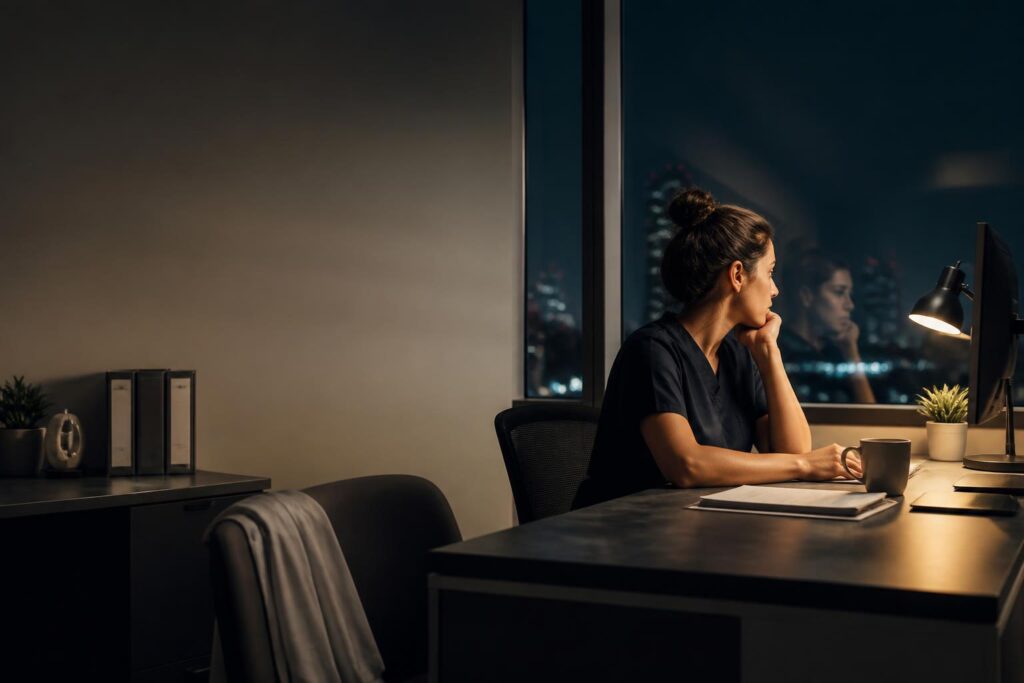
The lab can be quiet at night, but the responsibility does not get lighter. Fewer people are around, the hallways feel different, and the pace can look slower from the outside, but the work still needs to be correct.
That is the strange part of night shift. It looks calm until something needs attention. Then you realize how much of the shift depends on your patience, your judgment, and your ability to troubleshoot without a crowd of people nearby.
This is Day 4 of my 4-day lablife reflection series, Things the Lab Teaches You That No One Trains You For. And night shift belongs in that list because no one can fully explain it to you before you live it. You can be trained on procedures, instruments, policies, and where to find supplies. But no one can train you completely for the silence, the fatigue, and the way your own habits become very visible when the rest of the hospital feels half-asleep.
The quiet does not mean easy
Day shift has its own pressure. More people, more calls, more movement, more interruptions. Night shift has a different rhythm. There may be fewer footsteps, fewer conversations, and fewer people walking through the lab, but the responsibility is still heavy.
That difference can surprise people. Quiet does not always mean relaxed. Sometimes quiet means you have more room to think. Sometimes it means there are fewer people to ask when something unexpected happens.
In the lab, the work does not become less important because it is 2 a.m. A result still needs to be checked. A problem still needs to be followed up. If something does not look right, you still have to stop and think before moving forward. Night shift teaches you that responsibility is not measured by how many people are watching you.
That lesson can feel uncomfortable at first. On days, there may be someone close by to confirm, to explain, or to catch what you missed. At night, you learn to rely on your training, your notes, your procedures, and your own calm thinking. You still ask for help when needed, but you also learn not to panic just because you are the one facing the problem first.
Fatigue exposes your routines
Fatigue changes the way small things feel. A simple task can take more effort when your body wants sleep. A small interruption can feel bigger. Even basic routines become important because they protect you from rushing or skipping steps.
Night shift teaches you the value of doing things the same careful way, especially when you are tired. Where you place something, how you check your work, how you pause before releasing a result, how you organize the bench — these small habits can save you from mistakes.
This is where lab life is very practical. You do not need a dramatic lesson to learn discipline. Sometimes the lesson is just realizing that your routine is what keeps you steady when your energy is low.
For example, if an instrument gives you trouble during a night shift, the temptation is to get frustrated quickly. A tired brain wants the problem to disappear. But troubleshooting does not care if you are sleepy. You still have to slow down, look at what changed, check the obvious things, and work through the steps. That kind of patience is learned the hard way.
Night shift shows how you handle silence
Some people think the hardest part of night shift is the work itself. Sometimes it is the silence.
There is a kind of quiet during night shift that makes you notice yourself. Your thoughts are louder. Your habits show up. If you tend to rush, you will see it. If you avoid checking details, the night will expose that too. If you get anxious when plans change, unexpected work will make that clear.
That is not always a bad thing. The lab has a way of showing us what needs attention. Night shift can reveal whether you are patient, whether you can stay calm, and whether you can keep going without needing constant encouragement.
It also shows how you respond when the work suddenly changes. A quiet stretch can turn into a busy one. You may be tired, but the job still asks you to think clearly. That is where independence grows. Not the proud kind where you pretend you never need help. The useful kind where you know what you can handle, what you should double-check, and when you need to call someone.
Calm is a skill, not a mood
One thing night shift teaches is that calm is not just a personality trait. It is a skill you practice.
You practice it when something unexpected happens and you do not immediately assume the worst. You practice it when you repeat a step instead of guessing. You practice it when you accept that fatigue is present, then build your work around that reality.
That part feels very close to the laboratory mindset. We do not just act because something feels urgent. We verify. We check. We troubleshoot. We follow the process, especially when pressure is present.
Night shift teaches that same lesson in a personal way. It asks, can you stay steady when there are fewer people around? Can you keep your standards when no one is standing beside you? Can you respect small routines even when you are tired?
Those questions follow you outside the lab too. A lot of adult life is like that. You do the right thing when no one is clapping. You manage your energy. You prepare before you are exhausted. You learn which habits help you and which ones make life harder.
What I think night shift really teaches
Night shift teaches patience because the hours can feel long and problems do not always solve themselves quickly.
It teaches independence because fewer people are nearby, and you have to know how to think through a situation.
It teaches troubleshooting because unexpected work does not wait for the most convenient time.
It teaches calm because fatigue and pressure are a bad combination if you let them control you.
Most of all, night shift teaches you to pay attention to your own patterns. How do you act when you are tired? Do you slow down or become careless? Do you ask for help at the right time? Do you respect your routines, or only follow them when the shift feels easy?
Those are not small questions. They are the kind of questions the lab asks quietly, again and again.
I do not think night shift is for everyone, and I do not think it needs to be romanticized. It can be hard on the body. It can feel lonely. It can make simple routines outside work more difficult. But it can also teach you things about yourself that a busier, louder shift might hide.
For me, that is the practical lesson from this final part of the series. The lab teaches technical skills, yes. But it also trains the parts of us that are harder to measure: patience, discipline, calm, and the ability to keep doing careful work when the room is quiet and the responsibility is still there.
If you work nights in the lab, or in any job where fewer people are around but the work still matters, pay attention to what the quiet hours reveal. Sometimes the night shift is not only testing your knowledge. It is showing you your habits.