
§02 The journal · Life and Personal
Small Comforts After a Lab Week
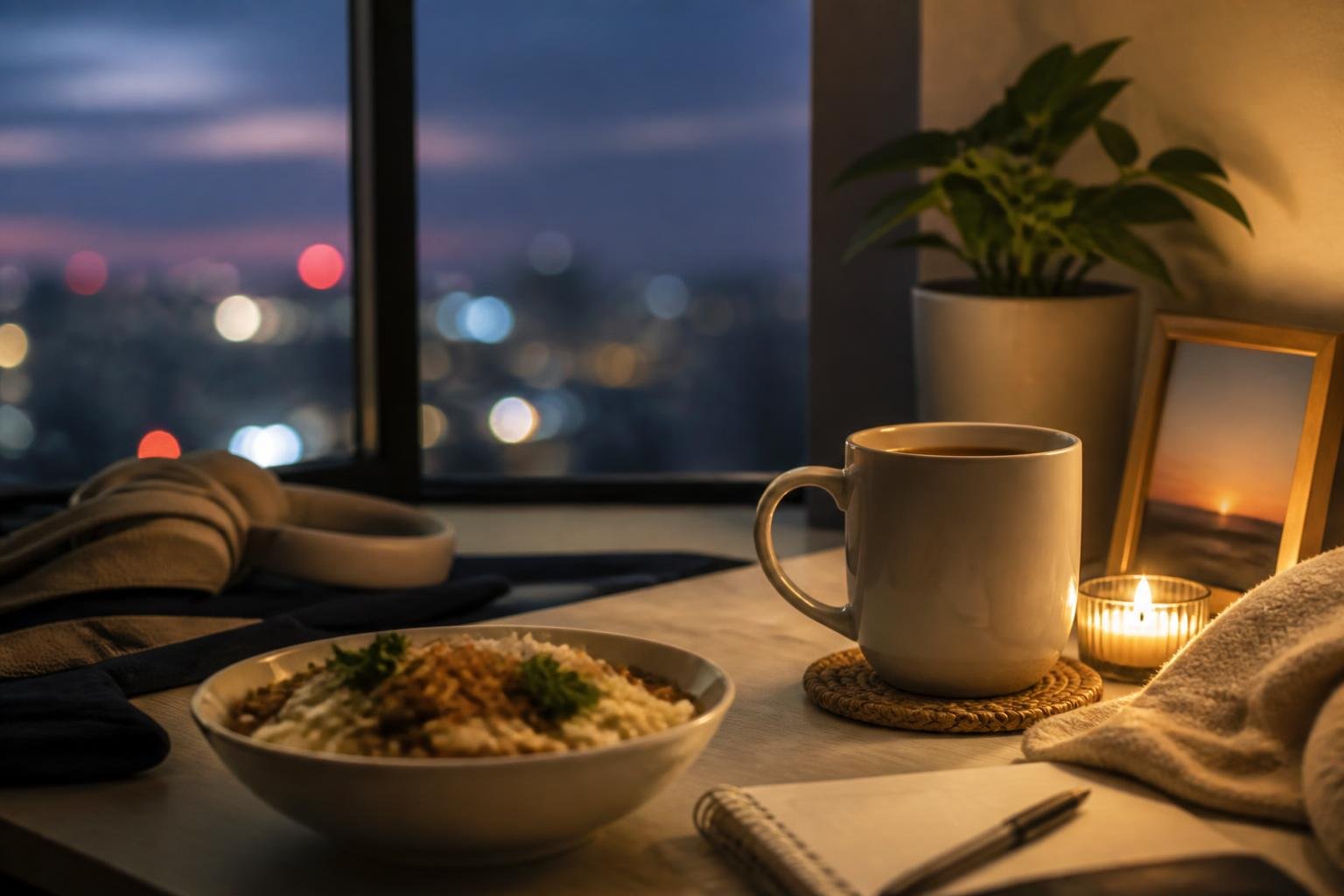
A week can look completely ordinary from the outside—work, chores, sleep, repeat—but one Filipino meal at home can change the feeling of the whole place. It does not erase the tiredness from the hospital lab. It does not magically make life in the USA feel simple. But it can make the apartment feel less like a stopover and more like a place where a person is actually living.
That is the small tension I keep noticing. We spend so much of our lab life trying to be exact. We check labels, verify results, follow procedures, watch for errors, and move carefully because small mistakes matter. Then we go home and realize that small comforts matter too, in a very different way.
They do not look impressive. No big announcement. No dramatic life update. Just food, music, a quick family call, and a few home routines that keep the week from feeling like a blur.
Food has a way of making a room familiar
Cooking a Filipino meal after work is one of those ordinary things that carries more weight than it looks. It can be something simple. Rice. A familiar ulam. The smell that makes you pause for a second before eating because it reminds you of a kitchen that is not here.
I know many lab people are practical about meals. We eat when we can. Sometimes the schedule decides for us. Some days, the best dinner is whatever is fast and does not require too many dishes. No judgment there. After a hospital shift, even washing a pan can feel like an extra competency assessment.
But there is something different about making food that tastes like home. It gives the week a marker. In the lab, we have controls to tell us if the system is working. At home, a familiar meal can feel like its own kind of control. Not in a scientific way, of course. More like a small reminder that the person inside the scrubs still exists outside the analyzer, the LIS, and the pending queue.
The food does not need to be perfect. Actually, sometimes that makes it more Filipino. You adjust by taste. A little more sour. A little more salt. Maybe you forgot one ingredient and you make it work anyway. That kind of cooking is not always pretty, but it is honest. And after a week of following strict steps at work, there is comfort in a meal that allows a little adjustment.
A familiar song can reset the room
Hearing a familiar song can do the same thing. It can be a Filipino song, an old playlist, or something you used to hear while growing up. The strange part is how fast it works. One minute you are folding laundry or cleaning the kitchen. Then a song plays, and suddenly the room feels warmer.
Lab work can be noisy in its own way. Instruments, timers, phone calls, alerts, printers, conversations during handoff. Even when the lab is controlled and professional, there is still a lot of sound competing for your attention. At home, choosing what fills the room becomes a small luxury.
A familiar song does not ask for much. You do not have to explain your whole life to it. You do not have to be productive while listening. It just reminds you of a rhythm you already know.
Sometimes that is enough. Especially for people working far from the Philippines, comfort does not always arrive as a big emotional moment. Sometimes it is just a chorus you still remember while you are heating food or wiping the counter.
The quick family call still counts
A quick family call can also anchor an ordinary week. It may not be long. It may happen between errands, after a shift, or while doing something else at home. But hearing a familiar voice can make the distance feel more manageable.
I am careful with this one because family calls are not always soft and easy. Sometimes the connection is bad. Sometimes everyone is busy. Sometimes you are tired and you do not have a long update to give. And sometimes the call is full of very normal questions that somehow feel heavy when you are already drained.
Still, even a short call can remind you that life is not only the work schedule posted for the week. There are people who know your voice outside your professional tone. They do not need you to explain what a critical value is or why the lab cannot just release a result without checking. They know you as a whole person, not only as the MedTech who can troubleshoot at work but forgets to buy dish soap at home.
That last part is hypothetical, of course. But also, very possible.
For lab professionals abroad, connection often has to fit into odd spaces. A message. A short call. A quick check-in. It may not feel like much, but it helps keep the week from becoming only about tasks.
Simple routines make a place feel lived in
There is also comfort in a simple home routine. Nothing fancy. Washing the same mug. Preparing something for the next day. Tidying one corner. Putting clothes where they should be, or at least near where they should be. We do what we can.
I like routines because they are quiet. They do not require a big plan. They just say, this is my space, and I am taking care of it in small ways.
In the lab, routine protects quality. You do things in the right order because the result matters. At home, routine protects your sense of normal. It tells your brain that the day has a beginning and an ending. You are not just moving from shift to shift like a specimen on a conveyor.
That may sound funny, but lab people understand how easy it is to become process-minded. Clock in. Check pending. Run. Verify. Document. Hand off. Go home. Repeat. A home routine interrupts that pattern gently. It gives your personal life its own rhythm.
It could be cooking rice before anything else. It could be playing music while cleaning. It could be a quick family call before bed. It could be setting aside a few minutes to reset the kitchen so tomorrow does not start with yesterday’s mess waiting for you.
These things are not glamorous. They are also not wasted.
Home is built in small repeats
Living in the USA as a Filipino MedTech can make you aware of small differences. The food tastes different unless you make it yourself. The songs are not always the songs you grew up hearing. Family is reachable, but not always physically close. Even home routines have to be rebuilt because your schedule, space, and energy are different now.
So the comfort is not only in the object itself. It is in the repeating. Cook the meal. Play the song. Make the call. Keep the routine. Not every day. Not perfectly. Just often enough that your life outside work has familiar corners.
That is important for people in the lab because our work can train us to notice what is wrong. A mismatch. A delay. A value that needs verification. A step that was missed. That instinct is useful, and it keeps patients safe. But outside work, it helps to also notice what is quietly working.
The rice cooked properly. The song made the room feel less empty. The call was short but good. The kitchen is not perfect, but it is better than before. These are small controls too, in a human way. They tell you that ordinary life is still running.
I think many of us wait for life abroad to feel like home in one clear moment. Maybe it rarely works that way. Maybe it happens through repeated small comforts that slowly become part of the week.
An ordinary week may still be tiring. The lab will still have its pending list, its checks, its little surprises. But if there is a familiar meal, a familiar song, a quick family call, or one simple routine waiting at home, the week feels less like something to survive and more like something you are building.