
§02 The journal · Life and Personal
The Small Delay Between Work and Home
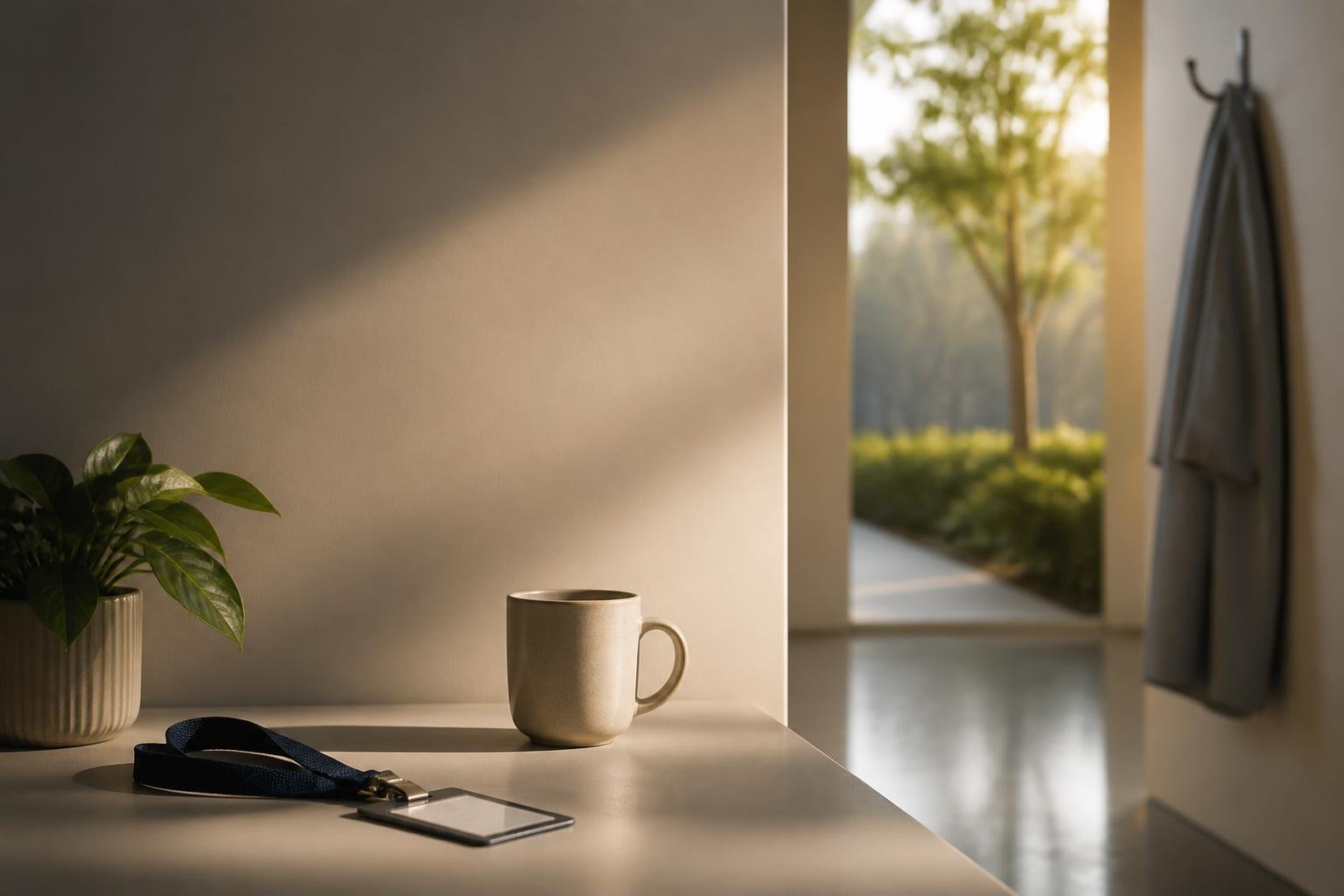
The badge comes off before the day does. That is the strange part after a laboratory shift: you can clock out, change out of your work clothes, and still feel like part of you is standing near the analyzer, waiting for one more result to verify.
Those few minutes between work and home look simple from the outside. You finished your shift. You left the hospital. Now you go back to regular life. But lab people know there is a small delay there. The body moves first. The mind follows a little later.
I think about that space often as a Filipino MedTech working in the USA. Not in a dramatic way. More like a quiet observation. There is a point after the shift when you are no longer actively working, but you are also not fully home yet. You are in between roles. Lab coat off. Shoes still tired. Brain still checking if anything was missed.
The shift does not end exactly at clock-out
In the lab, we are trained to close loops. We verify. We check QC. We look twice before releasing something that can affect a patient’s care. If there is a critical value, we know it cannot just sit there. Even after a regular shift, that habit does not disappear the moment we step away from the bench.
Sometimes the transition is as ordinary as changing out of work clothes. Scrubs, jacket, badge, shoes, whatever your routine is. It is a small act, but it matters. You are taking off the part of the day that belonged to specimen labels, turnaround times, maintenance logs, calls, and instruments that do not care if you are hungry.
Then there is the car. Or the kitchen. Or that short pause before talking to anyone at home. Nothing special has to happen. No big story. No emergency. Just the normal weight of a hospital laboratory shift settling into your shoulders after the work is technically done.
I used to think I should switch quickly. Work is work, home is home. Simple. But it is not always that clean. A lab shift asks for attention in a very specific way. You spend hours being careful because carelessness has consequences. It makes sense that your nervous system does not immediately become soft and relaxed the second you leave the building.
That quiet pause is not wasted time
There are days when the best thing to do is sit for a few minutes before going inside. Not to scroll forever. Not to avoid home. Just to let the day land.
For a MedTech, silence can feel odd because the lab is rarely fully silent. There are analyzers running, printers making noise, phones ringing, timers, centrifuges, refrigerators, coworkers asking quick questions, and that mental checklist that keeps updating. Then suddenly you are in the car, and the only job is to breathe and drive safely.
That small delay helps me not bring the bench straight into the house. If I walk in still carrying the lab pace, I can become too sharp without meaning to. The same focus that helps at work can feel heavy at home. Nobody at home asked for a supervisor tone. Nobody needs me to treat dinner like a pending specimen.
So those few quiet minutes become a kind of buffer. A gentle handoff. The hospital had my attention. Now home gets the version of me that has had a little time to come down from the shift.
Gratitude can be quiet too
Working abroad has a way of making ordinary things feel layered. As a Filipino MedTech in the USA, the work is professional, practical, and serious. It is also part of building a life far from where you started. That does not mean every day feels inspiring. Some days you are just tired. Some days you just want to remove your shoes and stop answering questions.
Still, there is room for gratitude in that tiredness. Not the loud kind. More like a simple acknowledgment: I made it through another shift. I did the work carefully. I have a place to go after the hospital. I can change out of my work clothes and step back into personal life, even if the switch takes a few minutes.
That kind of gratitude does not erase fatigue. It sits beside it. For lab professionals, I think that is more honest than pretending we are always energized by purpose. Yes, the work matters. Yes, patients depend on accurate results. Yes, we should be thankful for the opportunity. And yes, we can still be drained after hours of concentration.
Both can be true in the same kitchen, with the same tired feet.
Letting the day settle before speaking
One thing I am learning is that transition time is also respect. Respect for the people at home, and respect for myself.
There are moments after shift when the first conversation at home can set the tone. If you enter still mentally troubleshooting, you may answer too quickly. If someone asks a normal question and your brain is still in lab mode, even a simple reply can come out colder than intended.
That is why a pause helps. Maybe it is sitting in the car for a minute before opening the door. Maybe it is standing in the kitchen without rushing to explain the whole day. Maybe it is changing clothes first, washing up, and allowing the hospital version of your mind to step back.
This is not a perfect routine. I do not think lab people need another rule to follow. We already have enough procedures, checklists, and policies. This is more like permission. You are allowed to need a few minutes.
The lab teaches us to verify, even emotionally
One thing I appreciate about laboratory work is that it trains you not to react too fast. If a result looks unusual, you do not panic first. You check the specimen. You look at QC. You review the instrument. You ask if the result fits.
Maybe that habit can help after work too. Before assuming we are angry, maybe we are just overstimulated. Before deciding we had a bad day, maybe we are just hungry and quiet. Before carrying the whole shift into the evening, maybe we need ten minutes to let the noise clear.
That sounds simple, but it is useful. Lab work can make us disciplined in ways that extend beyond the bench. The same carefulness we give to patient samples can remind us to be careful with our own reactions when we walk through the door.
Home life deserves accuracy too.
A small space I want to protect
I do not want to over-romanticize this. Sitting in a car after work is still sitting in a car after work. Changing out of scrubs is still laundry waiting to happen. A tired MedTech is still tired.
But I think there is something healthy about recognizing that little gap between the hospital and home. It is easy to ignore because it is not scheduled. Nobody writes it on the assignment board. Nobody gives a handoff report for your own mind. You just leave, and life expects you to be ready for the next role.
Maybe readiness takes a few quiet minutes.
So if you are a lab professional reading this after a shift, maybe you know that delay too. The moment when the work is done, but your thoughts are still catching up. The moment when gratitude and fatigue sit together. The moment when you are no longer in the lab, but not fully settled at home yet.
I think that space is worth protecting. Not because it fixes everything, but because it gives the day somewhere to land before we carry ourselves into the people and place waiting for us.