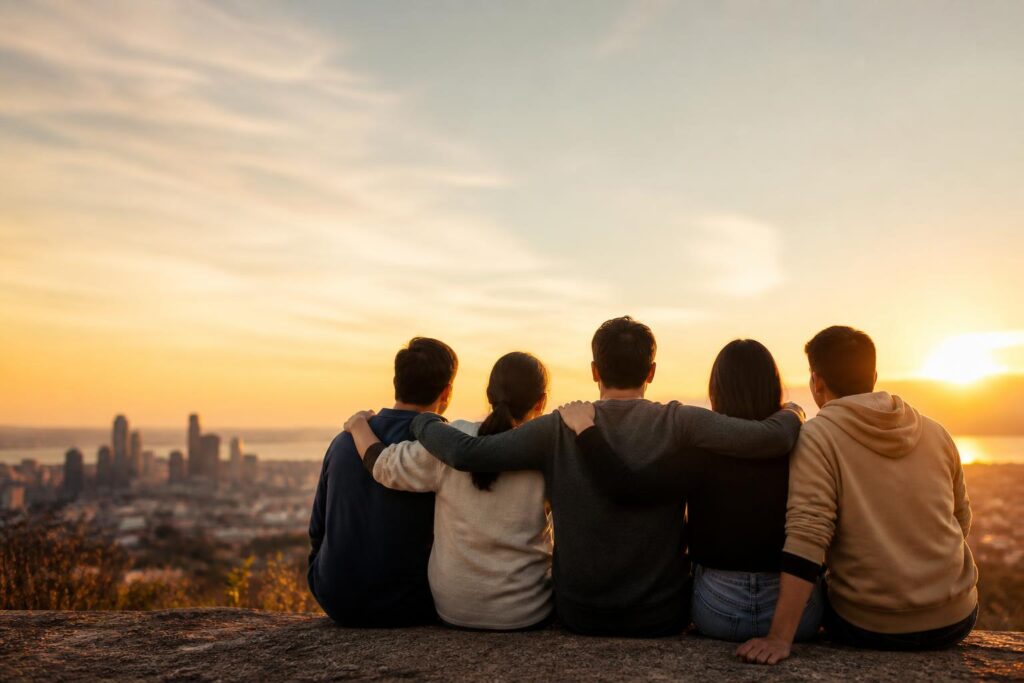
A ride to the grocery can feel too small to call friendship, until you are the one standing in a new country trying to figure out how to get there. A plate of food after church can look ordinary, until it is the first meal in weeks that tastes close to home. That is the part I keep thinking about as a Filipino MedTech in the USA: loneliness here is not always loud, and friendship does not always arrive in dramatic ways.
Sometimes it starts with someone asking if you need a ride. Sometimes it starts with shared food. Sometimes it starts with church, errands, a small invitation, or a simple check-in that says, “Kumusta?” without making you explain too much.
The tension is real. We leave the Philippines for work, opportunity, family goals, and a better future, but we do not stop being sons, daughters, siblings, cousins, titos, titas, ninongs, ninangs, and friends back home. The friendships we build abroad do not replace family in the Philippines. They help us carry the distance.
The lab has structure. Life outside it does not always have one.
Inside the hospital laboratory, we live by process. We verify patient identifiers. We check controls. We repeat when something does not look right. We document. We know that small mistakes can become big problems if nobody catches them early.
Outside work, life abroad is not that neat. There is no clear procedure for missing home after a long shift. There is no analyzer flag that says, “You are getting isolated.” Nobody prints out a critical result that says, “Call someone before this gets worse.”
That is why ordinary friendships matter so much for lab professionals abroad. We are used to being useful. We are used to solving problems. We are used to being calm when work is busy. But outside the lab, many of us are still learning how to receive help without feeling weak.
A friend from church who asks if you already ate. A co-worker who knows you are new and offers a ride. A family who invites you after Sunday service. Someone who remembers you have no relatives nearby and checks in after a difficult week. These things can look small, but when you are far from the Philippines, they become part of how you stay steady.
Friendship often begins before we call it friendship
Many Filipino friendships abroad do not begin with a big emotional conversation. They begin with practical kindness.
Shared food is one of the easiest doors. It does not need to be fancy. Food has a way of making people feel less like guests and more like they belong. For Filipinos, that is familiar. We do not always say everything directly, but we know how to say care through a meal, a packed container, an extra serving, or an invitation to sit down and eat first.
Errands can also become friendship. Someone needs to go to the Asian store. Someone needs help carrying groceries. Someone is trying to figure out where to buy something familiar from home. One errand becomes a conversation. One conversation becomes another plan. After a while, the person who gave you a ride is no longer just someone helping you with transportation. They become part of your rhythm.
Church can be another place where that rhythm forms. Not every friendship has to start there, of course, but for many Filipinos abroad, church becomes one of the first places where people notice if you are missing, tired, new, or alone. It gives a regular place to show up. It gives a reason to talk before and after service. It gives people a chance to invite, feed, pray, listen, and check on each other.
For a MedTech, this is important because our work can be isolating in its own way. We may be surrounded by machines, samples, phone calls, and results, yet still feel unknown outside our role. People in the hospital may know how fast we release results, how we handle a busy night, or how we respond to a stat sample. But outside that badge, we also need people who know whether we have eaten, whether we are adjusting, and whether the quiet is becoming too heavy.
Distance changes the shape of family
One thing I would never want to say carelessly is that friends abroad replace family in the Philippines. They do not.
Family back home has a different place in the heart. They know the older version of you. They know your childhood, your province or city, your habits, your old jokes, your struggles before migration, and the reasons you left. Even when life abroad gets better, there is still a part of you that belongs there.
But distance changes what support looks like. A family member in the Philippines can love you deeply and still not be able to drive you home after a late activity in America. They can pray for you, message you, and encourage you, but they cannot always sit beside you at church or help you with a sudden errand. They cannot always see your face after a hard shift and know you need food more than advice.
This is where friendships abroad become a mercy. They do not erase homesickness. They make it more bearable. They give the distance a human cushion. They remind you that while your roots are still in the Philippines, your daily life here also needs care.
That is a hard balance for many immigrants. There can be guilt in enjoying life abroad. There can be guilt in building close friendships when your family is far away. But belonging in a new place does not mean loving home less. It means you are allowing yourself to survive and grow where you are currently planted.
Ordinary check-ins can catch what pride hides
Lab people understand the value of small checks. Quality control is not exciting, but it protects the result. A tiny shift can tell us something is wrong before the patient result is affected. We do not ignore patterns just because the machine is still running.
Friendship has its own version of that. The ordinary check-in may not look important, but it can catch what pride hides.
“Did you get home safe?”
“Do you need anything from the store?”
“Are you coming to church this week?”
“You seemed quiet. Are you okay?”
Those questions are simple, but they break the silence. They give a person permission to admit, even a little, that the week has been heavy. For Filipino MedTechs abroad, especially those who are used to being dependable, that matters more than we sometimes admit.
Many of us know how to keep going. We know how to work holidays. We know how to adjust to staffing needs, different hospital systems, and new expectations. We know how to be professional even when we miss birthdays, family meals, and ordinary days back home. But being able to function is not the same as being okay.
A check-in from a friend does not solve every problem. It will not remove the immigration paperwork, the pressure to send help home, the tiredness after work, or the ache of being far from family. Still, it can interrupt the feeling that you are carrying everything alone.
Belonging is built through repetition
Belonging abroad is rarely instant. It is built through repeated small things: showing up at church, accepting invitations, sharing food, saying yes to errands, offering rides when you can, and checking in on someone else when you notice they have gone quiet.
For lab professionals, the schedule can make this harder. Hospital work does not always respect weekends. Some shifts leave you too tired to socialize. There are days when the best thing you can do is sleep, eat, and prepare for the next duty. That is real life.
But friendship does not always require a long event. Sometimes it is a message. Sometimes it is a short visit. Sometimes it is sitting together after church. Sometimes it is joining someone for groceries because both of you need to go anyway. The friendship grows because the contact is repeated, not because every moment is deep.
This is also where we need to be willing to initiate. It is easy to wait for someone else to invite us, especially when we are new or shy or worried about bothering people. But many friendships abroad begin because one person takes a small risk. A simple “Do you want to come with us?” or “I can pick you up” can be enough.
And when we are the ones who have been abroad a little longer, we can remember how it felt to be new. The person who looks fine at work may still be lonely after clocking out. The new Filipino MedTech may know how to run specimens and follow hospital policy, but still not know where to find familiar food, a church community, or people who understand the strange mix of gratitude and homesickness.
Friendship abroad is practical love
I like the phrase practical love because it does not make friendship sound too perfect. Real friendships abroad are not always emotional or poetic. Sometimes they are logistical.
They are rides.
They are errands.
They are invitations.
They are shared food.
They are check-ins after work, after church, or during an ordinary week.
For Filipino MedTechs and other lab professionals, this kind of friendship fits the life we actually live. We may not always have the time or energy for long gatherings. We may be on different shifts. We may be tired from hospital work. But we can still build something real through small acts that repeat over time.
There is hope in that. You do not need a huge circle to feel less alone in America. A few steady people can make a place feel kinder. A few ordinary invitations can make a city feel less cold. A few check-ins can remind you that you are more than your work badge, more than your immigration status, and more than the distance between you and home.
America can feel lonely, even when life is moving forward. That is the honest part. But friendship can enter through very normal doors: a church seat saved beside someone, a container of food handed over, an errand done together, a ride offered without making it awkward, a message sent before the silence gets too long.
Those friendships will never replace family in the Philippines. They are not supposed to. They simply help us breathe while we build a life far from home.
And maybe that is enough for today: notice the person who might need a small invitation, and accept the one offered to you when you are the one feeling far away.