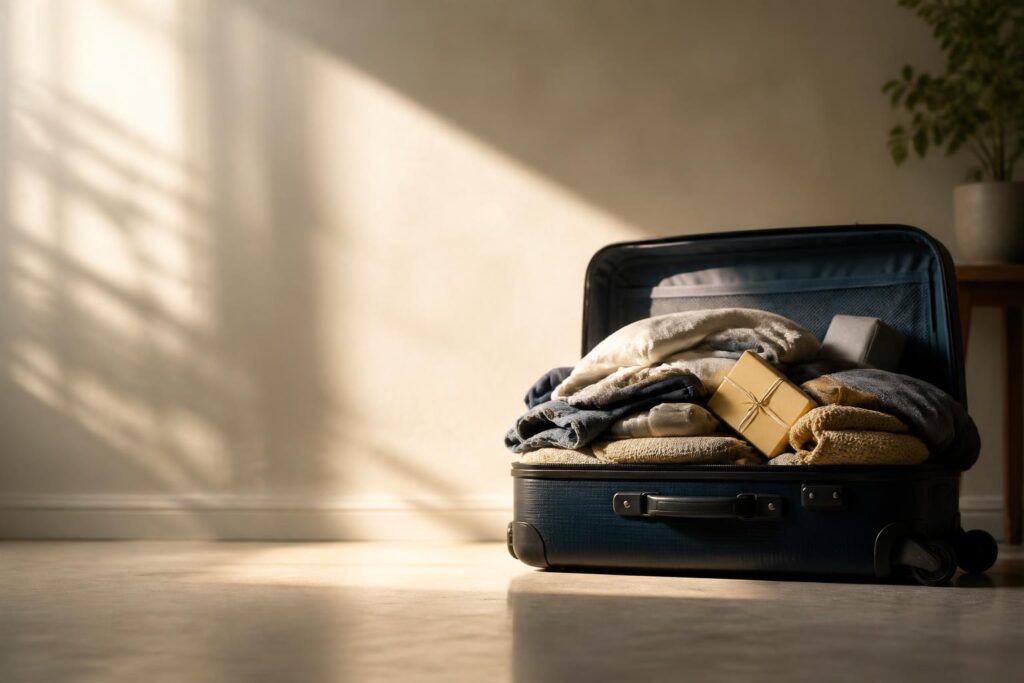
The suitcase can become the heaviest part of a Philippine visit before anything is even packed. Airfare is already paid, luggage limits are already waiting, and somehow the imaginary pasalubong list keeps getting longer like a specimen log during morning rush.
That is the funny and slightly stressful part of going home as a Filipino working abroad. The visit is supposed to be about seeing people. Hugging family. Eating food you missed. Sitting in a house where the noise feels familiar. But somewhere along the way, the suitcase starts to feel like a report card.
As a Filipino MedTech in the USA, I understand the feeling from both sides. We want to bring something. We want people to feel remembered. We also know airfare, luggage allowance, and the cost of daily life do not magically disappear because we are visiting the Philippines.
Here is the tension: a full suitcase can look generous, but a lighter one does not mean we care less.
The pasalubong list has a way of expanding
Balikbayan expectations are real. Sometimes they are spoken directly. Sometimes they are just understood. A small gift here, something for a relative there, chocolates for the kids, maybe a shirt, maybe a thing someone asked for because “mas mura diyan” or “madali lang naman bilhin.”
And yes, sometimes it is easy to laugh about it. Filipino families can turn gift distribution into a minor logistics operation. If hospital labs have accessioning, family visits have pasalubong triage.
But there is pressure in it too.
Before you even reach the airport, you are weighing more than luggage. You are weighing cost. You are weighing space. You are weighing who might feel left out. You are weighing whether a gift looks too small. You are weighing whether you should buy more even if your budget is already tired.
That part can feel uncomfortable to admit because we love our people. The pressure does not always come from greed. Many times, it comes from affection, habit, and the old Filipino way of showing care through something tangible. A gift says, “I remembered you.” A packed suitcase says, “I thought of home while I was away.”
Still, the math is real. Airfare is not cheap. Luggage has limits. Space runs out. Money has other assignments before it becomes chocolate, lotion, vitamins, shirts, toys, or whatever else fits between socks.
A lighter suitcase is not a failed visit
This is the part I wish more of us could say without guilt: presence counts.
Showing up matters. Sitting with family matters. Being physically there after building a life far from home matters. For many Filipino workers abroad, including lab professionals, going home is already an act of effort. It means planning around work, saving carefully, arranging travel, and carrying the emotional weight of being away for a long time.
A suitcase can be light and still be full of care.
Thoughtfulness does not always need quantity. It can be choosing a few things well instead of buying many things just to fill space. It can be bringing something practical for someone who asked for it. It can be writing names on simple items so nobody gets missed. It can be telling people ahead of time, kindly, that you are keeping things simple this visit.
Hypothetically, if you can only bring a small item for a sibling, a treat for the kids, and maybe something useful for your parents, that does not make the trip less loving. It just means you are working within real limits. In the lab, we respect limits all the time: specimen volume, stability, storage temperature, analyzer capacity. Outside the lab, somehow we forget we are also allowed to have limits.
And please, let us retire the quiet belief that love must be overweight at check-in.
Lab people know the danger of overloading
MedTechs and lab professionals understand pressure in a very specific way. We know what it feels like when everything is urgent. We know what it feels like when a rack is full, the phone is ringing, QC needs attention, and someone is asking if the result is ready.
That mindset follows us outside the hospital sometimes. We try to prevent disappointment like we prevent errors. We double-check. We add one more item “just in case.” We pack another gift because maybe someone will ask. Then another. Then suddenly the suitcase is giving critical value energy.
The problem is that guilt is not a good packing strategy.
If we treat every expectation like a stat order, we will burn out even during vacation. A Philippine visit should not feel like an audit of how successful you became abroad. It should not turn into proof that life overseas is always easy or overflowing. Many Filipino workers abroad are disciplined because they have to be. Bills, savings, family support, and personal needs all live in the same budget.
It is okay to be generous. It is also okay to be honest.
Those two can exist together. Generosity does not require pretending there are no limits. Honesty does not mean being cold. A simple, “Pasensya na, konti lang dala ko ngayon,” can be said with warmth. The people who truly love you may still tease you, because Filipino families have a talent for commentary, but many will understand more than we expect.
Thoughtfulness travels better than quantity
When the suitcase is lighter, the question becomes: what kind of giving still feels meaningful?
One answer is to make it more personal. Instead of trying to bring something for every possible person, bring what you can with intention. If you know someone will actually use a certain item, that may be better than random extras bought in panic. If the budget is tight, small treats can still carry warmth. If space is limited, your time may be the better gift.
Time is not a consolation prize. For families separated by migration, time together is expensive in ways people do not always see. It costs airfare. It costs planning. It costs emotional energy. It costs the ache of leaving again when the visit ends.
That is why I think we need to be gentler with balikbayans and with ourselves. The suitcase is only one part of the visit. It should not become the main measurement of love.
Also, from a purely practical angle, nobody enjoys repacking at the airport floor while trying to move items from one bag to another. There is no dignity in publicly negotiating with a zipper. We have all seen that scene, or at least feared becoming that scene.
Coming home as yourself is already a gift
For Filipino MedTechs and lab professionals abroad, there is a version of us people may imagine. The one who works overseas. The one who earns in dollars. The one who can bring home nice things. That image can be flattering, but it can also be heavy.
Outside the laboratory, we are still regular people. We budget. We get tired. We compare prices. We think twice before buying extra luggage. We want to be generous, but we also want to be responsible.
A healthy kind of giving has room for both love and limits. It lets us bring what we can without turning the visit into a performance. It lets family receive the person, not just the products. It lets the balikbayan come home without feeling like every relationship has to be packed, wrapped, and distributed.
Maybe the better question before a trip is not, “How do I fill the suitcase?” Maybe it is, “How do I show care in a way I can actually carry?”
Sometimes the answer will include gifts. Sometimes it will include fewer gifts. Sometimes it will include a lot of sitting, talking, eating, laughing, and being present in the ordinary moments we missed while working far away.
If the suitcase is lighter, let it be lighter. You are still coming home.